Help us help you. By posting the year, make, model and engine near the beginning of your help request, followed by the symptoms (no start, high idle, misfire etc.) Along with any prevalent Diagnostic Trouble Codes, aka DTCs, other forum members will be able to help you get to a solution more quickly and easily!
2004 Honda Accord 2.4l Upstream showing zero volts
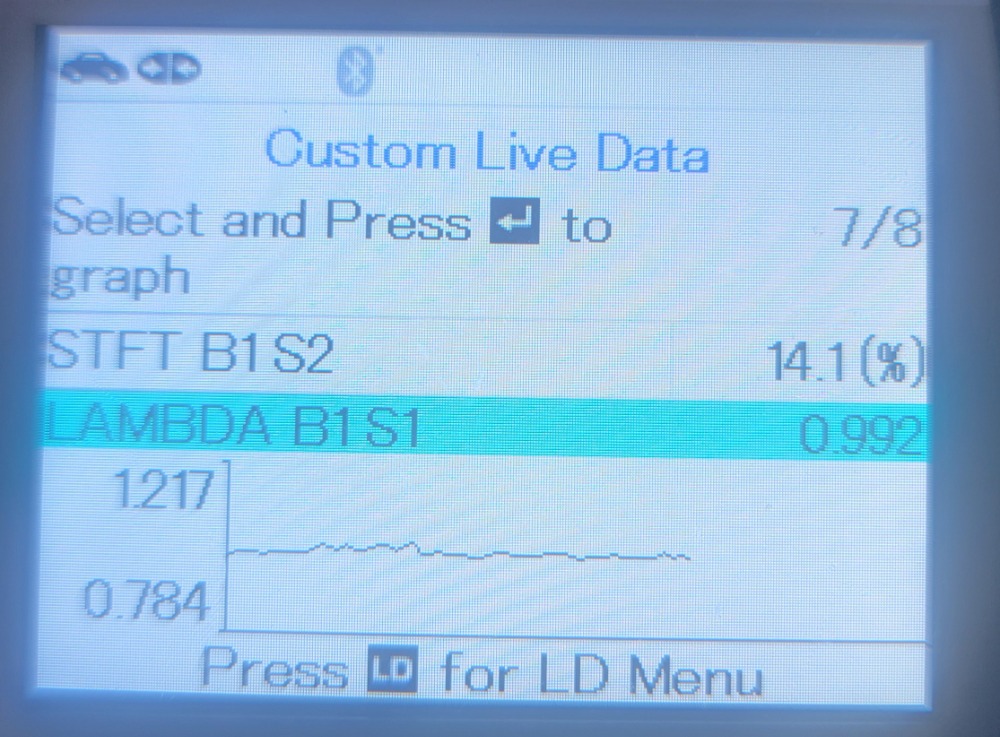
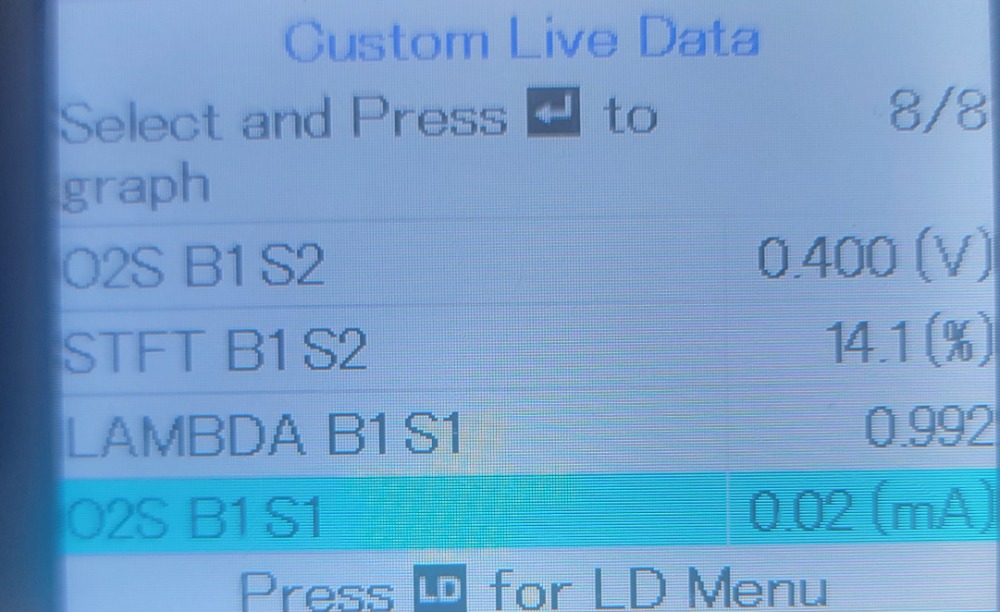
2004 Accord 2.4l with about 250k on the odometer. In the past, I was getting one of those O2 sensor codes(can't remember which), but the code would come and go. I was able to pass the CA smog test(with no cel) , but figured I'd replace the upstream O2 sensor because of the mileage and because of the fact that when I'd look at the live data for O2 sensors, I'd get zero volts on the upstream, but about .6 volts on the downstream. Figured it couldn't hurt to replace it with a Denso unit. Well, I'm still getting zero volts on the upstream O2 sensor and my question is this: Is this normal? I thought they both had to show voltage especially when reaching normal operating temperature? If so, then I might start looking at the wiring harness for the sensor for "opens". Also, it has the original Catyltic converter. Thanks for any help.
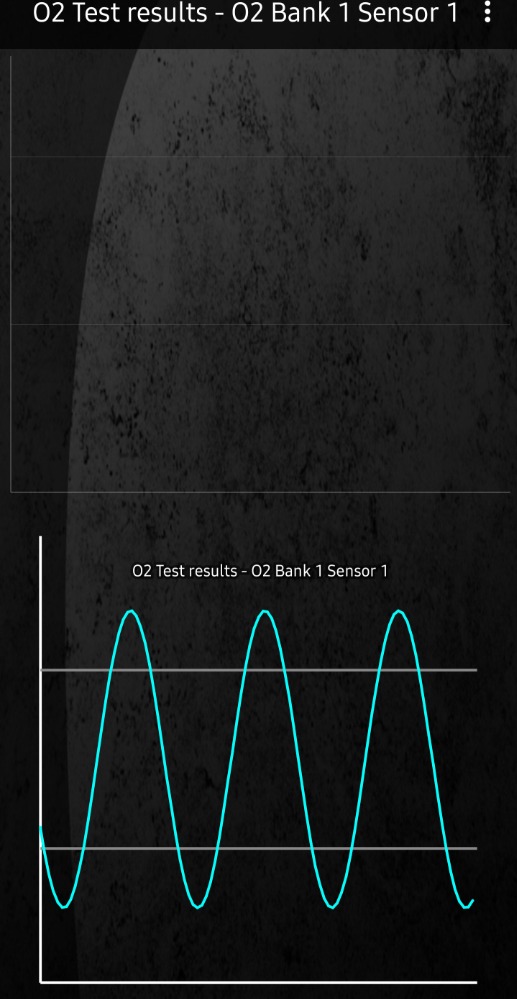
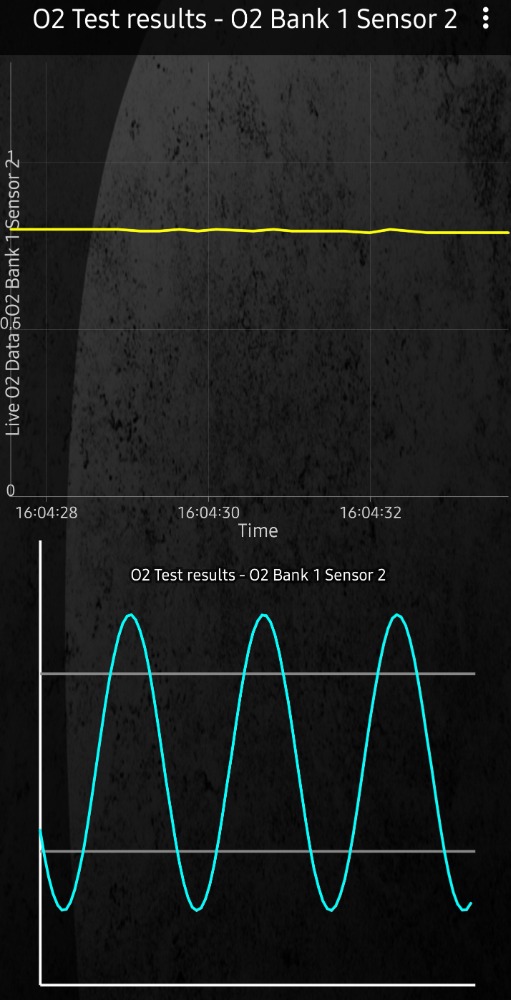
I see what you mean- live data not showing on sensor 1. Can your scan tool tell you the voltage it is seeing on what looks like on your both graphs to be 2 switching narrow band sensors?
According to Alldata, the front sensor is A/F and the rear, narrow band. If the front sensor reads 0v, I would expect the rear sensor to go richer as a result of the false lean condition in my opinion. Also, the sensor has a circuit that should not be ignored.
What do you mean by a circuit that should not be ignored?
The sensor has a heater circuit with 1 power feed coming from the A/F sensor relay ( black wire) and a control from the pcm(black wire) a signal wire (red) and a ground wire(red/yellow) coming from the ECM/PCM. You have to check all the wires for opens and shorts. Power, ground, control to the heater and input signal to the pcm as well as checking the connector for corrosion, pin fitment and so on.

 Topic Author