Help us help you. By posting the year, make, model and engine near the beginning of your help request, followed by the symptoms (no start, high idle, misfire etc.) Along with any prevalent Diagnostic Trouble Codes, aka DTCs, other forum members will be able to help you get to a solution more quickly and easily!

2006 dodge charger 5.7 p2111

  • Sleiman
  • Sleiman's Avatar Topic Author
  • Offline
  • New Member
  • New Member
More
3 years 3 months ago #58454 by Sleiman
2006 dodge charger 5.7 p2111 was created by Sleiman
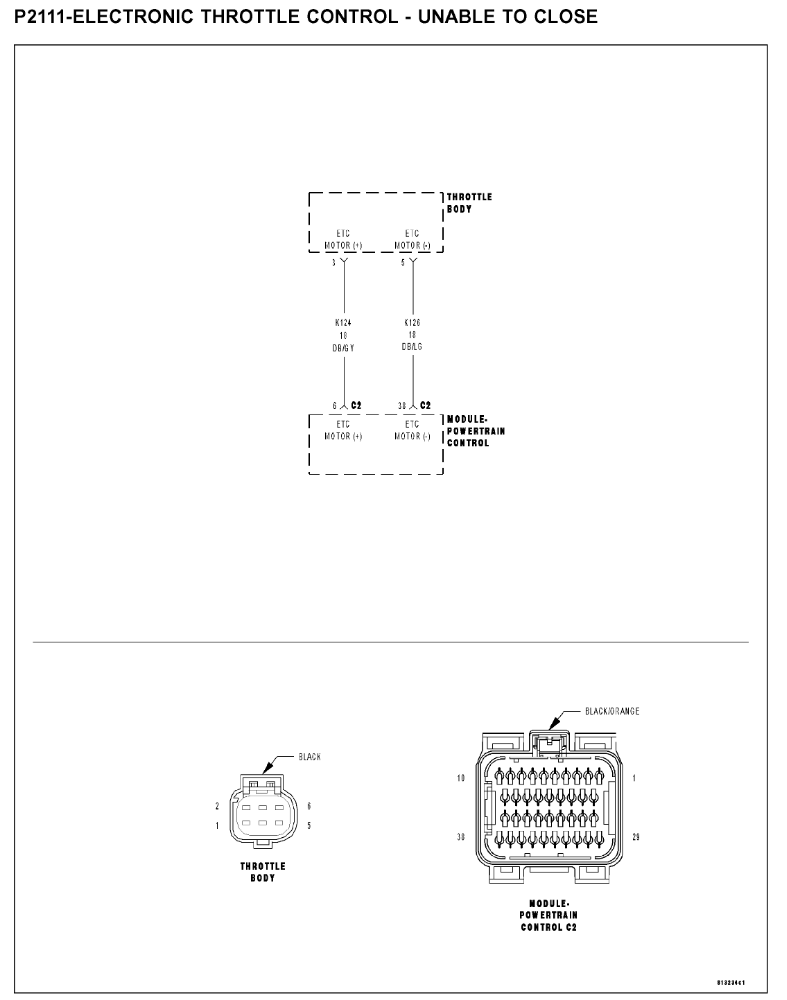
hello, i need some help figuring out the operation of the throttle body on a 2006 dodge charger with :2 tp sensor wires , one low reference ,one 5v ref and one etc(motor+) and etc (motor-).if any one knows how the last two are supposed to work please let me know. the car starts and instantly dies after 1 second because the throttle is not openning
thank you

Please Log in or Create an account to join the conversation.

  • Tyler
  • Tyler's Avatar
  • Offline
  • Moderator
  • Moderator
  • Full time HACK since 2012
More
3 years 3 months ago #58482 by Tyler
Replied by Tyler on topic 2006 dodge charger 5.7 p2111

if any one knows how the last two are supposed to work please let me know.


I'm not the engineer. :cheer: But my understanding is that most throttle motor circuits are driven by H-bridges. In other words, the PCM can reverse the polarity across the two motor wires depending on if it wants to close the throttle, or open it.

en.wikipedia.org/wiki/H-bridge#DC_motor_Driver


As for your P2111, service info is a bit vague:

Set Condition:

When the Powertrain Control Module (PCM) detects an error in the ETC Motor Driver or throttle position.


It's that last bit that makes me think this might not be a problem in the motor circuit itself, but in the position sensors. :huh: Plus, there's other fault codes in service info that pertain specifically to the motor circuit (P2100, P2101, P2118).

I'd suggest taking voltage readings at all six throttle wires, backprobed, with the key on. That'll give you a good basis to continue your testing on.

Please Log in or Create an account to join the conversation.

Time to create page: 0.302 seconds