
*** Restricting New Posts to SD Premium Members ONLY *** (09 May 2025)
Just made a new account? Can't post? Click above.
Help us help you. By posting the year, make, model and engine near the beginning of your help request, followed by the symptoms (no start, high idle, misfire etc.) Along with any prevalent Diagnostic Trouble Codes, aka DTCs, other forum members will be able to help you get to a solution more quickly and easily!
Drivability problem driving me crazy for 1 year
- babajis2010
-
 Topic Author
- Offline
- Premium Member
-

Less
More
- Posts: 113
- Thank you received: 5
7 years 3 months ago - 7 years 3 months ago #22663
by babajis2010
Replied by babajis2010 on topic Drivability problem driving me crazy for 1 year
Thanks Juergen. Sometimes car diagnosis require some historical information.
Before I changed my old CAT, it had 4 wrong upstream and downstream sensors and had DTC’s for all of them without any CAT DTC. I bought 2 OEM upstream sensors and 2 used downstream sensors and immediately after installing them DTC P0420 and P0430 popped out from nowhere. So I thought maybe the DTCs have been there all along or maybe the programmers made it so that once you have bad sensors DTC for CAT will not come up until you address the oxygen sensors first.
After a year of buying the brand new OEM sensor from Toyota dealership, I went again and somehow met another person and asked him to write out all the information of the 4 sensors on the same paper they printed out for me before selling me the sensors which already had the all the information, but I just wanted to double check, this is where things get very clumsy for me. Bank 2 sensor 1 he said that was right, then bank 1 sensor 1 he cancelled the part number and wrote another number. My bank 2 sensor 1 is 89467-42020....my bank 1 sensor 1 they sold to me was 89467-42010
Almost a year or so I went back he changed bank 1 sensor 1 number to 89467-44030.
My CAT was suffering from extreme heat and once I parked I could hear the frying sound in the CAT, with my driving experience I thought raw fuel was getting into the CAT or the CAT couldn’t breathe properly and thereby overheat for lack of oxygen. Usually if I clear CAT DTC they come back within 7 days, but after I removed my muffler to allow some oxygen in I guess the frying sound in the CAT stopped when I’m parked only clicking sound which I believe is normal for CAT to make when cooling down due to thermal expansion.
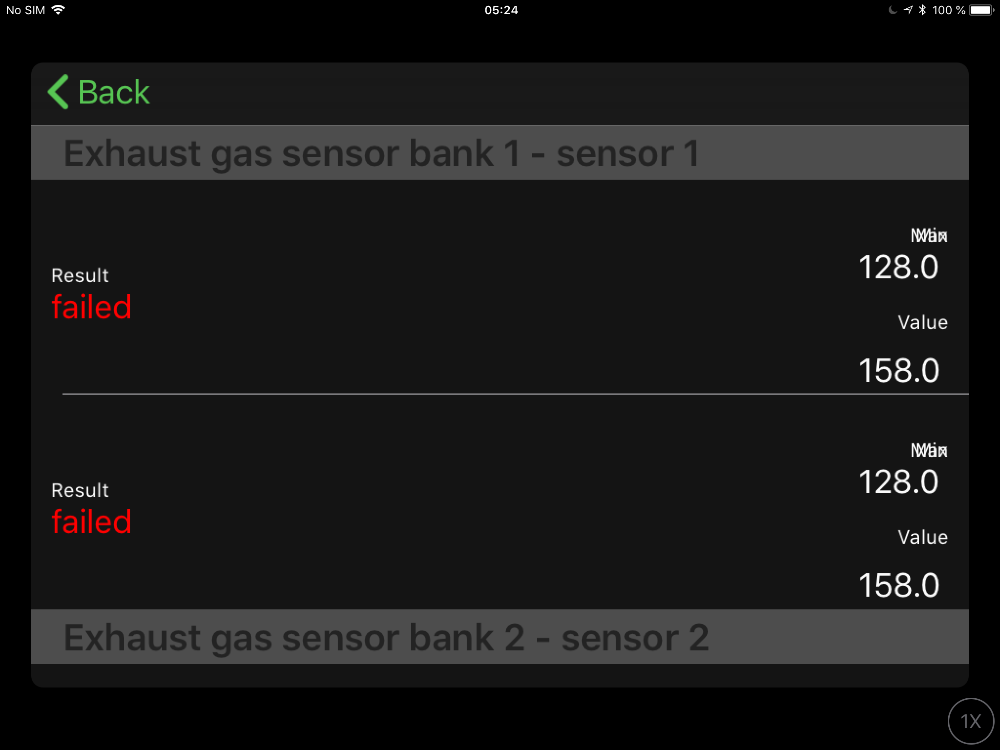
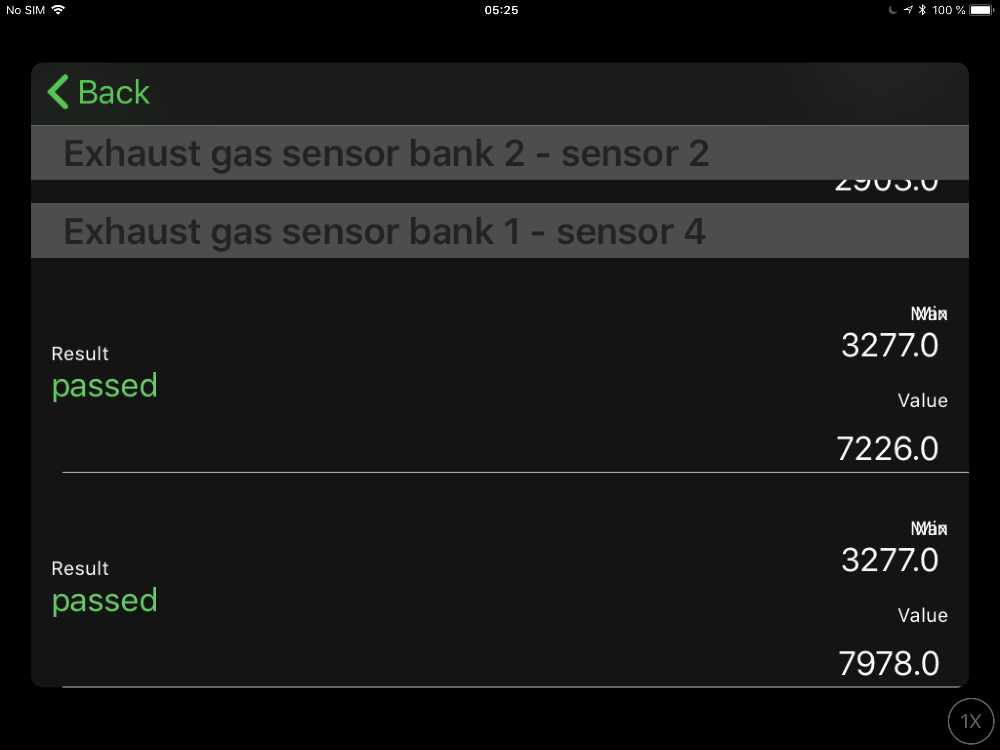
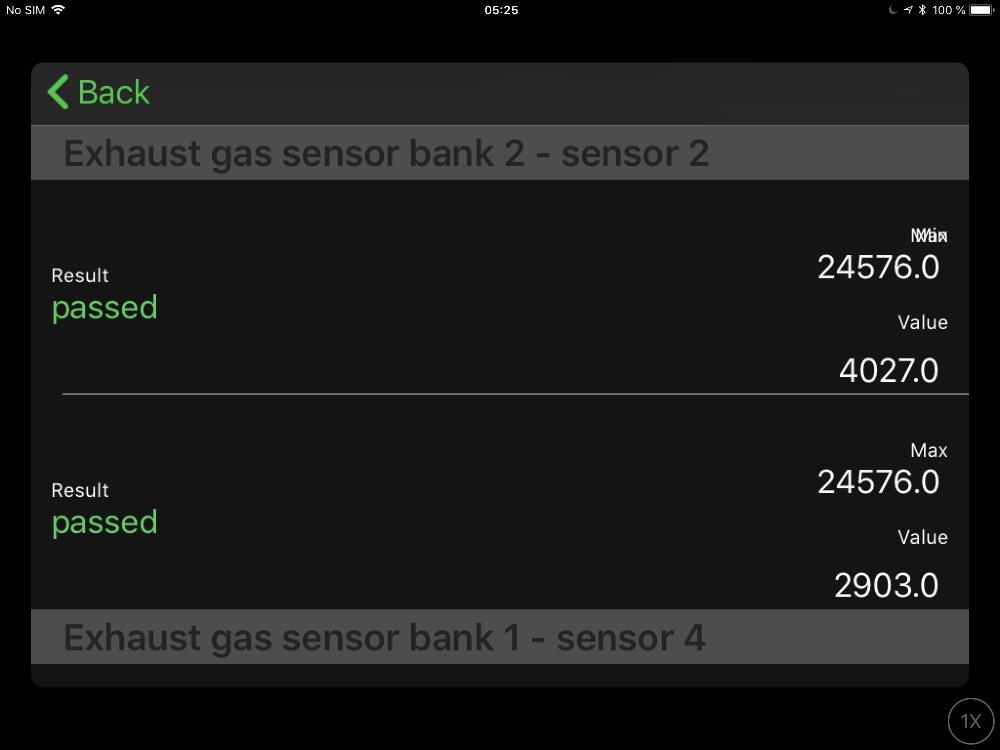
Now to the part that I feel will point anyone helping me in the right direction. I have posted my exhaust gas info from my WiFi OBD2 and if you look carefully the OBD2 is showing failure in just one part all the time, other parts always passed.
Its showing exhaust gas sensor - bank 1 sensor 1 high and if you went back to my ordeal with Toyota company you would see the part number the guy changed was for bank 1 sensor 1, I’m trying to tie all this together because DTC for CAT popped up immediately I changed all my 4 sensors and not before.
I put the OBD2 info on google and what I’m getting are several DTCs on exhaust gas as a result of EGT sensor....exhaust gas temperature sensor which I don’t know if my car uses or maybe that’s oxygen sensor for my car. I DO NOT HAVE the DTCs below but they seem to be about the result of my own car gas exhaust. My exhaust gas is checking fine in other bank and sensor only on bank 1 sensor 1, but then when I removed my muffler and it did pass I still had drivability problem. Also note that after removing my muffler P0420 and P0430 came back after almost 14days instead of the usual 7 days.
P0544 Exhaust Gas Temperature Sensor Circuit Bank 1 Sensor 1
P2478 Exhaust Gas Temperature Out of Range Bank 1 Sensor 1. (The purpose of the exhaust gas temperature sensor is to monitor the temperature of the exhaust gases and convert it into a voltage signal that is sent to the ECU. The ECU utilizes the input to control engine conditions and effectively reduce emissions. The ECU recognizes these voltage variations and reacts accordingly, adjusting ignition timing or the air/fuel mixture to lower the exhaust gas temperature and protect the catalytic converter. Exhaust gas temperature sensors are incorporated in diesel engines, gasoline burning engines, and even turbocharged engines. This process also improves performance and fuel economy
Read more at: www.obd-codes.com/p2478
Copyright OBD-Codes.com)
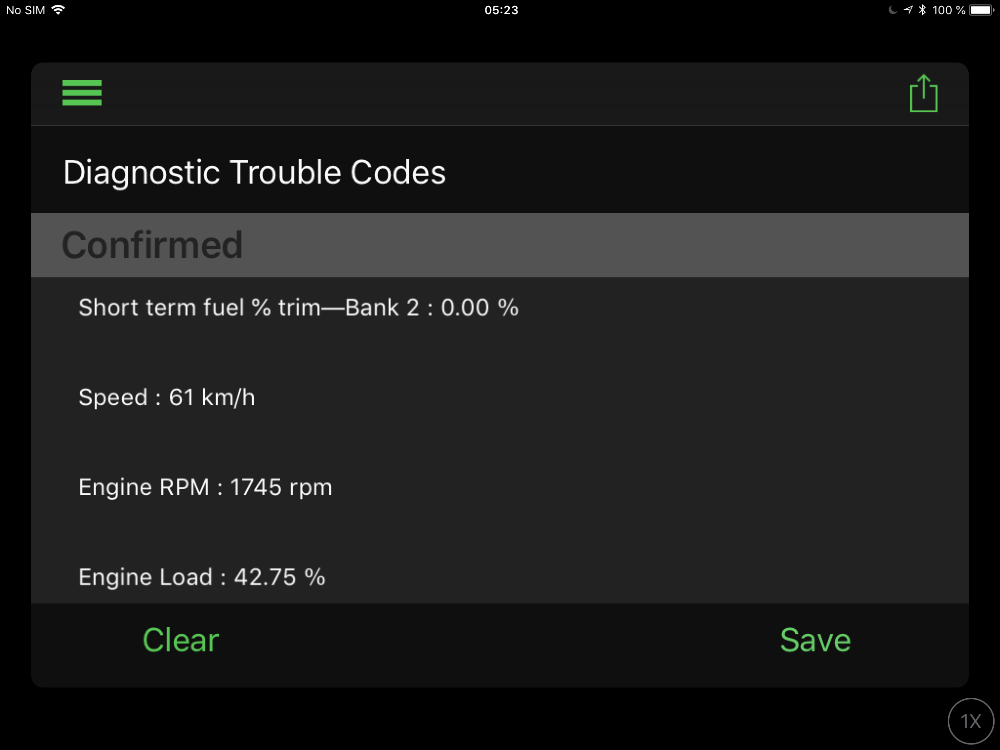
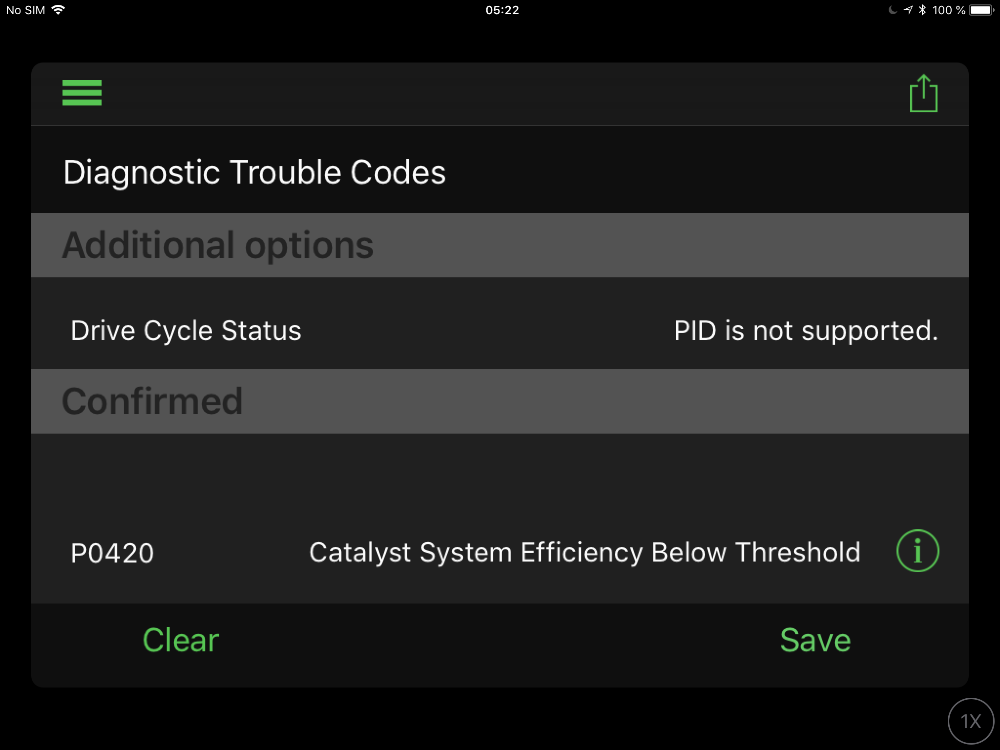
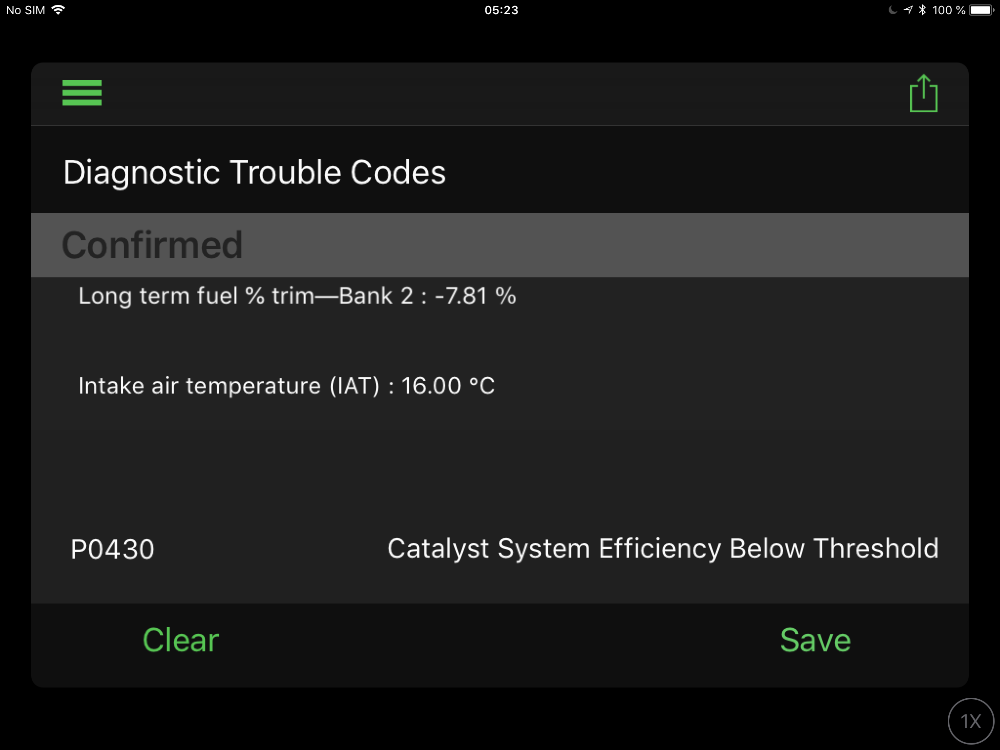
I’m attaching my result from OBD2 on my exhaust system and also DTCs for CAT that just popped up after 14 days with freeze frame data. Can someone please tell me what’s going on on bank 1 sensor 1. I am going to do resistance tests on all the 4 sensors later just to see if this car has sensor problem or other problem. I want to believe installing just one wrong oxygen sensor is enough to throw the whole system out of performance.
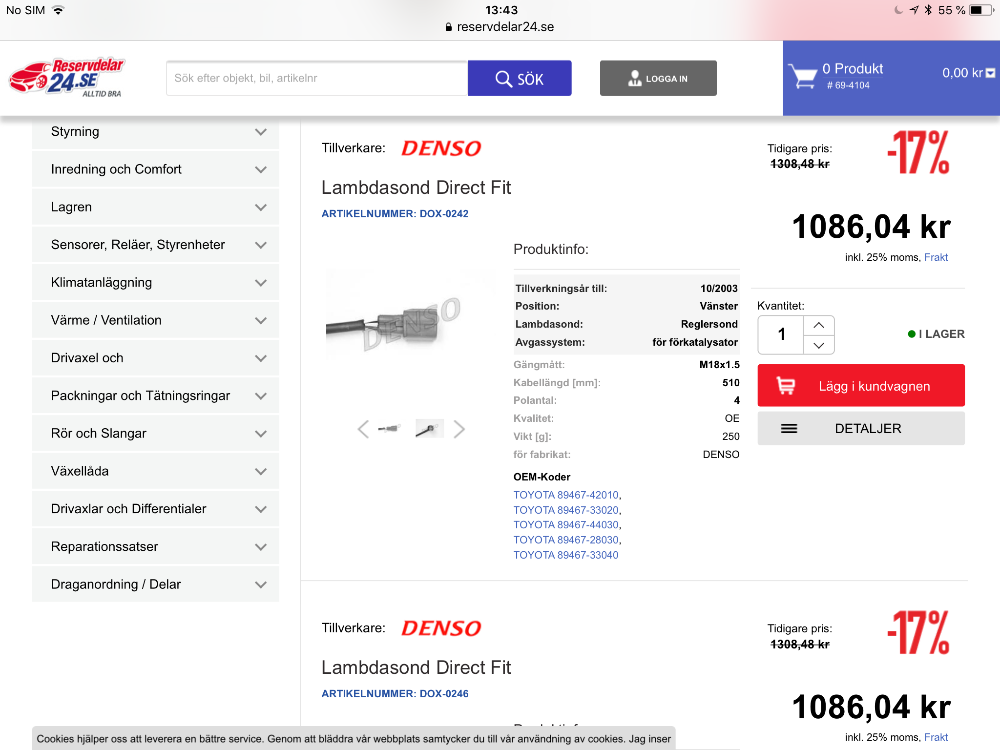
Now if finally the problem is as a result of Toyota company selling me wrong part, how can I go about dealing with this. The reason I didn’t take this up with Toyota company was because on another website I saw both part numbers listed for my car registration number (89467-42010 and 89467-44030) see pix attached.
Before I changed my old CAT, it had 4 wrong upstream and downstream sensors and had DTC’s for all of them without any CAT DTC. I bought 2 OEM upstream sensors and 2 used downstream sensors and immediately after installing them DTC P0420 and P0430 popped out from nowhere. So I thought maybe the DTCs have been there all along or maybe the programmers made it so that once you have bad sensors DTC for CAT will not come up until you address the oxygen sensors first.
After a year of buying the brand new OEM sensor from Toyota dealership, I went again and somehow met another person and asked him to write out all the information of the 4 sensors on the same paper they printed out for me before selling me the sensors which already had the all the information, but I just wanted to double check, this is where things get very clumsy for me. Bank 2 sensor 1 he said that was right, then bank 1 sensor 1 he cancelled the part number and wrote another number. My bank 2 sensor 1 is 89467-42020....my bank 1 sensor 1 they sold to me was 89467-42010
Almost a year or so I went back he changed bank 1 sensor 1 number to 89467-44030.
My CAT was suffering from extreme heat and once I parked I could hear the frying sound in the CAT, with my driving experience I thought raw fuel was getting into the CAT or the CAT couldn’t breathe properly and thereby overheat for lack of oxygen. Usually if I clear CAT DTC they come back within 7 days, but after I removed my muffler to allow some oxygen in I guess the frying sound in the CAT stopped when I’m parked only clicking sound which I believe is normal for CAT to make when cooling down due to thermal expansion.
Now to the part that I feel will point anyone helping me in the right direction. I have posted my exhaust gas info from my WiFi OBD2 and if you look carefully the OBD2 is showing failure in just one part all the time, other parts always passed.
Its showing exhaust gas sensor - bank 1 sensor 1 high and if you went back to my ordeal with Toyota company you would see the part number the guy changed was for bank 1 sensor 1, I’m trying to tie all this together because DTC for CAT popped up immediately I changed all my 4 sensors and not before.
I put the OBD2 info on google and what I’m getting are several DTCs on exhaust gas as a result of EGT sensor....exhaust gas temperature sensor which I don’t know if my car uses or maybe that’s oxygen sensor for my car. I DO NOT HAVE the DTCs below but they seem to be about the result of my own car gas exhaust. My exhaust gas is checking fine in other bank and sensor only on bank 1 sensor 1, but then when I removed my muffler and it did pass I still had drivability problem. Also note that after removing my muffler P0420 and P0430 came back after almost 14days instead of the usual 7 days.
P0544 Exhaust Gas Temperature Sensor Circuit Bank 1 Sensor 1
P2478 Exhaust Gas Temperature Out of Range Bank 1 Sensor 1. (The purpose of the exhaust gas temperature sensor is to monitor the temperature of the exhaust gases and convert it into a voltage signal that is sent to the ECU. The ECU utilizes the input to control engine conditions and effectively reduce emissions. The ECU recognizes these voltage variations and reacts accordingly, adjusting ignition timing or the air/fuel mixture to lower the exhaust gas temperature and protect the catalytic converter. Exhaust gas temperature sensors are incorporated in diesel engines, gasoline burning engines, and even turbocharged engines. This process also improves performance and fuel economy
Read more at: www.obd-codes.com/p2478
Copyright OBD-Codes.com)
I’m attaching my result from OBD2 on my exhaust system and also DTCs for CAT that just popped up after 14 days with freeze frame data. Can someone please tell me what’s going on on bank 1 sensor 1. I am going to do resistance tests on all the 4 sensors later just to see if this car has sensor problem or other problem. I want to believe installing just one wrong oxygen sensor is enough to throw the whole system out of performance.
Now if finally the problem is as a result of Toyota company selling me wrong part, how can I go about dealing with this. The reason I didn’t take this up with Toyota company was because on another website I saw both part numbers listed for my car registration number (89467-42010 and 89467-44030) see pix attached.


Last edit: 7 years 3 months ago by babajis2010.
Please Log in or Create an account to join the conversation.
- babajis2010
-
Topic Author
- Offline
- Premium Member
-
Less
More
- Posts: 113
- Thank you received: 5
7 years 3 months ago - 7 years 3 months ago #22664
by babajis2010
Replied by babajis2010 on topic Drivability problem driving me crazy for 1 year
Is it okay to have multiple oxygen sensor part numbers. See attached pix
I will upload data requested by Andy under various driving conditions once I put back the resonator as I’m expecting the packing for it. The car is so loud to drive without it.
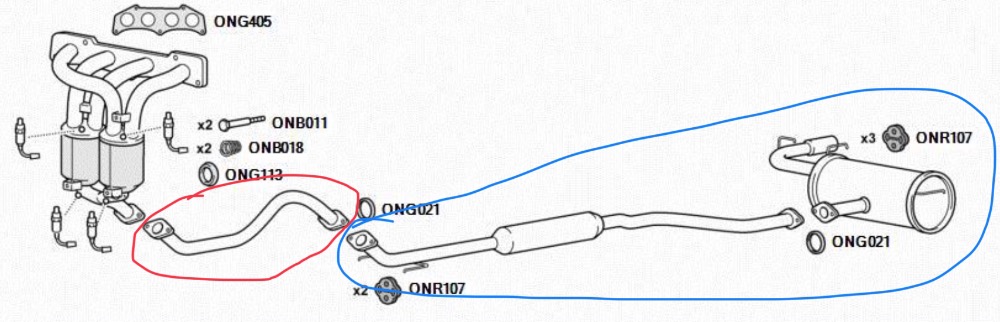
Since I can’t find any back pressure gauge, I am taking out the exhaust system one after the other to ascertain the fix, the part circle in red is left to be taken out whilst the parts circle in blue are out already. I have one more curved pipe after the CAT to take out. Did some digging on google and found someone with same problem and one of the posters gave a strong opinion about the exhaust system as the culprit and if you read carefully he wrote about wideband sensors being very sensitive to exhaust gas pressure and that’s exactly what my wideband bank 1 sensor 1 is reporting in my previous post. This shit is crazy because MAF, injector, oxygen sensors, exhaust back pressure due to restrictions, ECU, bad fuel pressure regulator, faulty Evap system, high fuel pressure are all tied together. I have read far too many internet posts on LTFT high at idle and low under load and every time the fix has been a new OEM MAF and things got back to normal after wasting so much time and money on other parts in the cars. I went to Toyota for an OEM MAF and was told I have 3yrs warranty but I can’t return an electrical part unless the part is actually faulty, so if the car’s problem is not a MAF I can’t return the MAF. I will be so messed up if MAF is not the real problem after forking out 2,600kronor for a new OEM MAF, so I need to go and find someone with a working OEM MAF in same make, model and year of my car to pull through this. Is there no way to fully bench test a MAF sensor?
Below is the guy’s post.
((((((((“think I have an answer
But bear in mind that this is my assessment with the limited information at my disposal.
I'll walk through my reasoning here. If someone finds a flaw in my logic then I'm all ears.
Here is a summary of your data
+
+
+
+
+
+
| Condition | LTFT1 | LTFT2 | STFT1 | STFT2 |
+
+
+
+
+
+
| Cold start | - 19% | - 11% | --- | --- |
+
+
+
+
+
+
| Idle | - 8% | - 2% | 0% | 0% |
+
+
+
+
+
+
| < 3500 RPM | - 14% | - 4% | ≈ 0% | ≈ 0% |
+
+
+
+
+
+
| > 3500 RPM | - 1% | + 1% | + 11% | + 12% |
+
+
+
+
+
+
First, let's clear some misconceptions
Don't take your STFT's to be a measure of system health
STFT's are not meant to stay positive forever. They are usually designed to compensate for instantaneous changes. At steady load & RPM, the values should go back to zero quite soon.
Because of this I'm not going to worry too much about the STFT numbers reported.
Any proposed theory should be able to explain the following:
Negative LTFT's with the engine warm, low RPM
In other words, if left uncorrected, the engine would be running too rich.
Common reasons for this include over-reading MAF's, excessive fuel rail pressure and leaky fuel injectors.
I don't see how a fresh-from-Bavaria M5 would suffer from any of these. Possible, just not probable.
LTFT's get less negative with increased load/RPM
If the LTFT's were positive at low RPM and tapering towards 0 at higher RPM, I'd tell you without skipping a heartbeat that unmetered air is a problem.
Since the LTFT's are negative at low RPM, you appear to have an issue with air leaking out after being metered by the MAF's.
Because this is a forced-induction beast, it would be readily explained by a post-turbo, post-MAF leak. However, the relative newness of this M5 makes me wonder if this is even remotely possible. This is also why I asked if anything after the turbos had been touched.
So what could it be?
Here's my take.
As it turns out, widebands are sensitive to exhaust gas pressure.
I don't mean to bore anyone to tears, but according to this document:
10.6 Pressure dependency of the sensor signal
A pressure change of the measured gas gives a deviation of the sensor output signal of:
Ip(P) = Ip(P0) * P/(k+P) * (k+P0)/P0
So to simulate the two scenarios (for pressures > 1 bar):
if pressure is lower than expected, the measured current reduces, resulting in a leaner-than-reality reading
if pressure is higher than expected, the measured current increases, resulting in a richer-than-reality reading
In light of this, I'd say the aftermarket exhaust may be the root cause:
I know nothing about this exhaust in terms of brand, specifications or cost, but if it has a larger backpressure than the factory setup at idle, it is a plausible explanation for Observation 1.
As for Observation 2, at higher loads the fuel management is designed to target a richer AFR, so the larger pressure drop may be less of an issue here.
How to verify this is the root cause
It should be obvious: go back to the factory exhaust and see what happens to the fuel trims!
If you see the LTFT's go back to normal at warm idle, the root cause would be confirmed”)))))))))
I will upload data requested by Andy under various driving conditions once I put back the resonator as I’m expecting the packing for it. The car is so loud to drive without it.
Since I can’t find any back pressure gauge, I am taking out the exhaust system one after the other to ascertain the fix, the part circle in red is left to be taken out whilst the parts circle in blue are out already. I have one more curved pipe after the CAT to take out. Did some digging on google and found someone with same problem and one of the posters gave a strong opinion about the exhaust system as the culprit and if you read carefully he wrote about wideband sensors being very sensitive to exhaust gas pressure and that’s exactly what my wideband bank 1 sensor 1 is reporting in my previous post. This shit is crazy because MAF, injector, oxygen sensors, exhaust back pressure due to restrictions, ECU, bad fuel pressure regulator, faulty Evap system, high fuel pressure are all tied together. I have read far too many internet posts on LTFT high at idle and low under load and every time the fix has been a new OEM MAF and things got back to normal after wasting so much time and money on other parts in the cars. I went to Toyota for an OEM MAF and was told I have 3yrs warranty but I can’t return an electrical part unless the part is actually faulty, so if the car’s problem is not a MAF I can’t return the MAF. I will be so messed up if MAF is not the real problem after forking out 2,600kronor for a new OEM MAF, so I need to go and find someone with a working OEM MAF in same make, model and year of my car to pull through this. Is there no way to fully bench test a MAF sensor?
Below is the guy’s post.
((((((((“think I have an answer
But bear in mind that this is my assessment with the limited information at my disposal.
I'll walk through my reasoning here. If someone finds a flaw in my logic then I'm all ears.
Here is a summary of your data
+
+
+
+
+
+
| Condition | LTFT1 | LTFT2 | STFT1 | STFT2 |
+
+
+
+
+
+
| Cold start | - 19% | - 11% | --- | --- |
+
+
+
+
+
+
| Idle | - 8% | - 2% | 0% | 0% |
+
+
+
+
+
+
| < 3500 RPM | - 14% | - 4% | ≈ 0% | ≈ 0% |
+
+
+
+
+
+
| > 3500 RPM | - 1% | + 1% | + 11% | + 12% |
+
+
+
+
+
+
First, let's clear some misconceptions
Don't take your STFT's to be a measure of system health
STFT's are not meant to stay positive forever. They are usually designed to compensate for instantaneous changes. At steady load & RPM, the values should go back to zero quite soon.
Because of this I'm not going to worry too much about the STFT numbers reported.
Any proposed theory should be able to explain the following:
Negative LTFT's with the engine warm, low RPM
In other words, if left uncorrected, the engine would be running too rich.
Common reasons for this include over-reading MAF's, excessive fuel rail pressure and leaky fuel injectors.
I don't see how a fresh-from-Bavaria M5 would suffer from any of these. Possible, just not probable.
LTFT's get less negative with increased load/RPM
If the LTFT's were positive at low RPM and tapering towards 0 at higher RPM, I'd tell you without skipping a heartbeat that unmetered air is a problem.
Since the LTFT's are negative at low RPM, you appear to have an issue with air leaking out after being metered by the MAF's.
Because this is a forced-induction beast, it would be readily explained by a post-turbo, post-MAF leak. However, the relative newness of this M5 makes me wonder if this is even remotely possible. This is also why I asked if anything after the turbos had been touched.
So what could it be?
Here's my take.
As it turns out, widebands are sensitive to exhaust gas pressure.
I don't mean to bore anyone to tears, but according to this document:
10.6 Pressure dependency of the sensor signal
A pressure change of the measured gas gives a deviation of the sensor output signal of:
Ip(P) = Ip(P0) * P/(k+P) * (k+P0)/P0
So to simulate the two scenarios (for pressures > 1 bar):
if pressure is lower than expected, the measured current reduces, resulting in a leaner-than-reality reading
if pressure is higher than expected, the measured current increases, resulting in a richer-than-reality reading
In light of this, I'd say the aftermarket exhaust may be the root cause:
I know nothing about this exhaust in terms of brand, specifications or cost, but if it has a larger backpressure than the factory setup at idle, it is a plausible explanation for Observation 1.
As for Observation 2, at higher loads the fuel management is designed to target a richer AFR, so the larger pressure drop may be less of an issue here.
How to verify this is the root cause
It should be obvious: go back to the factory exhaust and see what happens to the fuel trims!
If you see the LTFT's go back to normal at warm idle, the root cause would be confirmed”)))))))))
Last edit: 7 years 3 months ago by babajis2010.
Please Log in or Create an account to join the conversation.
- babajis2010
-
Topic Author
- Offline
- Premium Member
-
Less
More
- Posts: 113
- Thank you received: 5
7 years 3 months ago - 7 years 3 months ago #22903
by babajis2010
Replied by babajis2010 on topic Drivability problem driving me crazy for 1 year
I was so busy with work and haven’t had time to do much on the car.
I found someone with same car as mine and swapped his MAF and got same reading as mine and still drivability problem persists.
I decided to check resistance on all my 4 sensors today and it looks like my upstream brand new OEM sensors may be the culprits.
Toyota service manual says at 20 degrees Celsius or 68 degrees Fahrenheit for A/F upstream sensors I should get 1.8 - 3.4omhs, I had 1.1ohms. Most Toyota videos I’ve seen show 2.5 ohms for resistance bench test.
Manual says at 500 degrees Celsius or 932 degrees Fahrenheit for A/F upstream sensors I should get 5.0 - 7.5 ohms, I drove the car to heat up the CAT very well and the results for both upstream sensors were 1.6 ohms each.
I can’t remember if I checked this when I bought the sensors, so it’s hard to tell if maybe a vacuum leak could have heated the CAT beyond 950 degrees Celsius and possibly affect the resistance in the upstream sensor, even if that was to be true how come it didn’t affect the resistance in the downstream sensors. Need to go back to Toyota company and use my warranty, I think I have 3yrs or something on the sensors.
Downstream I got 12.5 and 14.5ohms at 20 degrees Celsius, manual says 11-16ohms are acceptable.
I got around 20 ohms when CAT was at optimum temperature, manual didn’t specify anything at 500 degrees Celsius.
I had my mind stuck on the oxygen sensors for a long time since immediately I changed all 4 sensors I got p0420 and p0430 that I didn’t get before on the old CAT and both codes came back immediately on the replacement used CAT, but I thought the CAT codes didn’t come up because I already had 4 bad sensors.
I’ve seen a YouTube video mimicking this same problem and in the first part of the video the guy only checked voltage across the brand new OEM A/F sensor and not resistance and immediately after installing the sensor, the CAT codes popped up that were never there before even though the customer claimed to have changed the CAT before.
I will also be changing my intake manifold gasket and all injectors o-rings as routine service which I already bought about a year ago.
Wondering if anyone using a Toyota could shed some light on this.i know 100% for sure the car will not mix the fuel and air properly if there is an abnormal A/F resistance, I am only trying to figure out if the sensor came with that resistance from factory and not caused by other problems from the car, so I don’t end up getting a replacement from Toyota with the right resistance of around 2.5 ohms only to end up with 1.1ohms after installation. Shouldn’t the PCM detect and throw some codes when it finds out amperage is out of range since amperage output is correlated to resistance reading?
This is so confusing, all my O2 and heater monitors are complete all the time at any given drive cycle and I don’t have any codes for oxygen sensors and Toyota dealership used my plate number to order for the A/F sensors.
My CAT monitor is complete sometimes and not complete another time and the drivability problem is always there whether CAT monitor is complete or not complete. If I fix the root cause of this drivability problem, then I believe the CAT monitor will constantly be complete.
This link below is talking about two types of resistance for Toyota A/F sensor (1.1ohms and 2.8ohms)
www.autoserviceprofessional.com/article/...sor-diagnosis?Page=4
I found someone with same car as mine and swapped his MAF and got same reading as mine and still drivability problem persists.
I decided to check resistance on all my 4 sensors today and it looks like my upstream brand new OEM sensors may be the culprits.
Toyota service manual says at 20 degrees Celsius or 68 degrees Fahrenheit for A/F upstream sensors I should get 1.8 - 3.4omhs, I had 1.1ohms. Most Toyota videos I’ve seen show 2.5 ohms for resistance bench test.
Manual says at 500 degrees Celsius or 932 degrees Fahrenheit for A/F upstream sensors I should get 5.0 - 7.5 ohms, I drove the car to heat up the CAT very well and the results for both upstream sensors were 1.6 ohms each.
I can’t remember if I checked this when I bought the sensors, so it’s hard to tell if maybe a vacuum leak could have heated the CAT beyond 950 degrees Celsius and possibly affect the resistance in the upstream sensor, even if that was to be true how come it didn’t affect the resistance in the downstream sensors. Need to go back to Toyota company and use my warranty, I think I have 3yrs or something on the sensors.
Downstream I got 12.5 and 14.5ohms at 20 degrees Celsius, manual says 11-16ohms are acceptable.
I got around 20 ohms when CAT was at optimum temperature, manual didn’t specify anything at 500 degrees Celsius.
I had my mind stuck on the oxygen sensors for a long time since immediately I changed all 4 sensors I got p0420 and p0430 that I didn’t get before on the old CAT and both codes came back immediately on the replacement used CAT, but I thought the CAT codes didn’t come up because I already had 4 bad sensors.
I’ve seen a YouTube video mimicking this same problem and in the first part of the video the guy only checked voltage across the brand new OEM A/F sensor and not resistance and immediately after installing the sensor, the CAT codes popped up that were never there before even though the customer claimed to have changed the CAT before.
I will also be changing my intake manifold gasket and all injectors o-rings as routine service which I already bought about a year ago.
Wondering if anyone using a Toyota could shed some light on this.i know 100% for sure the car will not mix the fuel and air properly if there is an abnormal A/F resistance, I am only trying to figure out if the sensor came with that resistance from factory and not caused by other problems from the car, so I don’t end up getting a replacement from Toyota with the right resistance of around 2.5 ohms only to end up with 1.1ohms after installation. Shouldn’t the PCM detect and throw some codes when it finds out amperage is out of range since amperage output is correlated to resistance reading?
This is so confusing, all my O2 and heater monitors are complete all the time at any given drive cycle and I don’t have any codes for oxygen sensors and Toyota dealership used my plate number to order for the A/F sensors.
My CAT monitor is complete sometimes and not complete another time and the drivability problem is always there whether CAT monitor is complete or not complete. If I fix the root cause of this drivability problem, then I believe the CAT monitor will constantly be complete.
This link below is talking about two types of resistance for Toyota A/F sensor (1.1ohms and 2.8ohms)
www.autoserviceprofessional.com/article/...sor-diagnosis?Page=4
Last edit: 7 years 3 months ago by babajis2010.
Please Log in or Create an account to join the conversation.
Time to create page: 0.291 seconds